
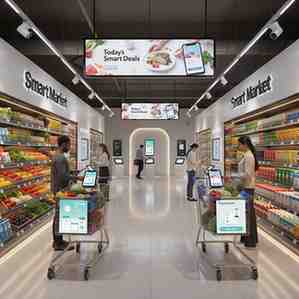
Supermaked: The retail industry has continuously evolved alongside human needs and technological progress. In earlier times, small local shops fulfilled basic daily requirements, offering a limited variety and personal interaction. Later, supermarkets transformed this landscape by introducing organised layouts, bulk purchasing, and improved convenience. However, with the rapid rise of digital technology, consumer expectations have shifted far beyond simple accessibility.
Today’s customers are not just looking for products; they expect speed, personalisation, and a seamless experience. As a result, new retail models have emerged to meet these demands. One such concept is supermaked, which reflects a modern approach to shopping where convenience and experience are equally prioritised. This blog explores how this concept is redefining the future of retail.
What is Supermaked? A Practical Explanation
Supermaked can be understood as a hybrid retail model that combines physical stores with advanced digital systems. Unlike traditional formats, it does not focus solely on selling goods. Instead, it emphasises creating a smooth and engaging customer journey, where every interaction is designed to reduce effort and enhance satisfaction.
In a supermaked environment, the shopping process becomes more intelligent and efficient. For example, store layouts are optimised for quick navigation, product suggestions are personalised, and checkout systems are streamlined. Consequently, customers experience less friction and more convenience, which makes shopping both faster and more enjoyable.
Evolution of Retail: From Supermarket to Supermaked
Retail has undergone several transformations over the years, each driven by changing consumer behaviour and technological advancements. Initially, small stores dominated the market, but supermarkets later introduced structure and efficiency. With the arrival of e-commerce, customers gained the ability to shop from home, which significantly increased convenience but reduced physical interaction.
However, this shift also revealed certain limitations, such as the lack of immediate product access and sensory experience. Therefore, hybrid models began to emerge, combining the strengths of both physical and digital retail. Over time, these models evolved into what is now known as supermaked, offering a balanced and advanced shopping experience.
Core Principles Behind the Supermaked Concept
The foundation of Supermaked lies in a set of key principles that guide its structure and operations. First, it adopts a customer-centric approach, where every decision is made with the shopper’s convenience in mind. Additionally, it prioritises efficiency by simplifying processes such as navigation, product selection, and payment.
Another important principle is personalisation, which is achieved through data driven insights. By analysing customer preferences, retailers can offer tailored recommendations and improve engagement. Furthermore, transparency plays a crucial role, as clear pricing and accessible product information help build trust and long term loyalty.
Why the Supermaked Concept is Gaining Attention
The growing popularity of supermaked can be linked to several modern trends. To begin with, consumer expectations have changed significantly, with people now seeking convenience, speed, and a more engaging shopping experience. Moreover, the widespread use of technology has made it easier for retailers to implement advanced systems that support this model.
In addition, increasing competition in the retail sector has pushed businesses to innovate and differentiate themselves. As a result, Supermaked offers a strategic advantage by combining efficiency with customer satisfaction. At the same time, fast paced urban lifestyles continue to drive demand for solutions that save both time and effort, further accelerating the adoption of this concept.
Key Features of a Supermaked Store
A supermaked store is designed with efficiency and user experience at its core. One of its most noticeable features is a smart and intuitive layout, where products are placed strategically to reduce search time. Instead of overwhelming customers with endless options, the store focuses on a curated selection that matches consumer needs. As a result, shoppers can quickly find what they are looking for without unnecessary confusion.
In addition, these stores often integrate digital tools that enhance the shopping journey. From mobile apps to self checkout systems, every element is aimed at minimizing friction. Furthermore, many supermaked environments adopt an omnichannel approach, allowing customers to switch seamlessly between online browsing and in-store purchasing. This combination creates a flexible and modern retail experience.
The Role of Technology in Supermaked
Technology acts as the backbone of the supermaked concept, enabling retailers to deliver faster and smarter services. Advanced inventory systems help maintain accurate stock levels, ensuring that customers can rely on product availability. At the same time, digital payment solutions simplify transactions, making checkout processes quicker and more convenient.
Moreover, data analytics plays a crucial role in understanding customer behavior. By tracking purchase patterns and preferences, retailers can offer personalized recommendations that feel relevant and timely. In many cases, artificial intelligence is also used to predict demand and optimize store operations. Consequently, technology not only improves efficiency but also enhances the overall customer experience.
Understanding Consumer Behavior in Supermaked
Modern consumers value convenience more than ever before, which directly influences how they interact with retail environments. In a supermaked setting, customers expect a smooth and time-saving experience, where every step is optimized for ease. Therefore, features such as quick navigation and minimal waiting times significantly impact satisfaction levels.
At the same time, personalization has become a key driver of engagement. When customers receive tailored suggestions based on their preferences, they are more likely to feel understood and valued. Additionally, a well designed environment reduces stress and makes shopping more enjoyable. As a result, supermaked not only meets practical needs but also creates a positive emotional connection.
Supermaked vs Traditional Supermarket
There are clear differences between a supermaked and a traditional supermarket, particularly in terms of experience and functionality. While supermarkets primarily focus on transactions and volume, supermaked emphasizes customer engagement and efficiency. This shift changes the entire shopping journey, making it more interactive and personalized.
Furthermore, traditional supermarkets often rely on manual processes and fixed layouts, whereas supermaked uses smart systems and adaptive designs. This allows for continuous improvement based on customer data and feedback. Consequently, supermaked offers a more dynamic and responsive environment that aligns with modern expectations.
Business Advantages of the Supermaked Model
From a business perspective, the supermaked model provides several strategic benefits. One of the most significant advantages is improved customer retention, as a better shopping experience encourages repeat visits. Additionally, data driven insights allow retailers to make informed decisions, which can lead to increased efficiency and reduced waste.
At the same time, this model supports long term growth by strengthening brand loyalty. When customers trust a store and enjoy their experience, they are more likely to return and recommend it to others. Moreover, the integration of technology helps streamline operations, enabling businesses to remain competitive in an evolving market.
Challenges and Limitations of Supermaked
Despite its advantages, the supermaked concept also presents certain challenges. One major concern is the high initial investment required for technology and infrastructure. Small businesses, in particular, may find it difficult to adopt this model due to limited resources. As a result, implementation can be uneven across different markets.
In addition, reliance on technology introduces risks related to system failures and data security. Customers may also have concerns about how their personal information is used. Therefore, maintaining trust becomes essential for long term success. Balancing innovation with privacy and reliability remains a key challenge for retailers adopting this approach.
Cultural and Economic Impact of Supermaked
The rise of supermaked is not only transforming retail systems but also influencing broader cultural and economic patterns. In many urban areas, shopping is no longer just a necessity; it has become part of a lifestyle experience. As a result, consumer expectations are shifting toward more interactive and convenient environments that reflect modern living standards.
Economically, this model is also reshaping how businesses operate and compete. Retailers are increasingly investing in technology driven solutions to stay relevant in a highly competitive market. Moreover, job roles are evolving as automation and digital systems reduce manual tasks while creating demand for tech-oriented skills. Consequently, the retail workforce is gradually adapting to a more digital-first economy.
The Future of Supermaked: What Lies Ahead
The future of supermaked is closely linked with advancements in artificial intelligence, automation, and smart infrastructure. In the coming years, we are likely to see more cashier less stores where transactions happen automatically through sensors and digital systems. This will further reduce waiting times and improve efficiency across the shopping journey.
Additionally, hyper personalization will become even more advanced as AI systems better understand individual preferences. Retailers will be able to predict customer needs before they even enter the store. At the same time, sustainability will play a major role, with eco-friendly packaging, energy-efficient operations, and waste reduction becoming standard practices in supermaked environments.
The Role of Sustainability in Modern Retail
Sustainability is becoming a key pillar in modern retail strategies, and supermaked models are no exception. Many retailers are now focusing on reducing plastic usage, optimizing supply chains, and sourcing products responsibly. This shift is driven by both environmental concerns and increasing consumer awareness.
Furthermore, energy-efficient store designs and digital receipts are helping reduce the overall environmental footprint. As customers become more conscious of their choices, businesses that prioritize sustainability are more likely to gain trust and loyalty. Therefore, eco-friendly practices are not just ethical but also strategically beneficial for long term growth.
Why Supermaked Represents the Future of Retail
Supermaked stands out because it successfully bridges the gap between traditional shopping and modern digital convenience. Unlike conventional retail models, it focuses on experience, personalization, and efficiency all at once. This combination makes it highly relevant in today’s fast paced world.
Moreover, it aligns perfectly with the needs of modern consumers who value time, comfort, and control over their shopping experience. As technology continues to evolve, this model will likely become even more refined and widespread. Therefore, supermaked can be seen as a natural evolution of the retail industry rather than just a temporary trend.
Conclusion
In conclusion, supermaked represents a significant shift in how people perceive and experience retail. It combines the best aspects of physical stores and digital innovation to create a seamless and intelligent shopping journey. As consumer expectations continue to evolve, this model offers a practical solution to modern retail challenges.
Ultimately, the success of supermaked depends on balancing technology with human experience. While automation and data driven systems improve efficiency, the human element remains essential for trust and emotional connection. Together, these factors define the future of retail in a rapidly changing world.
FAQs
1. What is supermaked in simple terms?
Supermaked is a modern retail model that combines physical stores with digital technology to create a faster, smarter, and more personalized shopping experience.
2. How is supermaked different from a supermarket?
Unlike traditional supermarkets, supermaked focuses on customer experience, personalization, and technology-driven convenience rather than just product sales.
3. Why is supermaked becoming popular?
It is gaining popularity due to changing consumer expectations, faster lifestyles, and the increasing role of digital technology in everyday shopping.
4. What technologies are used in supermaked?
Technologies like AI, data analytics, mobile apps, and smart checkout systems are commonly used to enhance efficiency and personalization.
5. What is the future of supermaked?
The future includes more automation, cashier-less stores, advanced personalization, and stronger sustainability practices.