Time has always been one of the most valuable resources in human life. From ancient sundials to mechanical watches, people have continuously searched for better ways to measure and manage time. However, the introduction of the digital clock marked a turning point. Instead of relying on moving hands, numbers became the new language of time. As a result, timekeeping became faster to read, easier to understand, and more accessible for everyone.
Today, digital clocks are everywhere. They appear on smartphones, laptops, home appliances, offices, classrooms, and even websites. Yet, many people use them daily without fully understanding how they work or why they remain relevant despite the rise of smart devices. To truly appreciate their importance, it is necessary to explore what makes digital clocks unique and why they continue to play a vital role in modern life.
What Is a Digital Clock?
A digital clock is a timekeeping device that displays time in numerical form rather than using analogue hands. Typically, it shows hours, minutes, and sometimes seconds using LED or LCD screens. Because of this clear numeric format, reading the time becomes almost effortless. Unlike traditional clocks, there is no interpretation involved. What you see is exactly what the time is.
Moreover, digital clocks often support multiple formats. Users can switch between 12-hour and 24-hour displays depending on their preference. This flexibility makes them suitable for global use, especially in workplaces, airports, and international environments. Consequently, digital clocks reduce confusion and improve time accuracy across different regions.
Why Digital Clocks Became So Popular
The popularity of digital clocks did not happen overnight. Instead, it grew gradually as people realised its practical benefits. First of all, readability played a major role. Large, bright numbers can be read from a distance, even in low-light conditions. Therefore, they are ideal for bedrooms, hospitals, and public spaces.
In addition, digital clocks require less mental effort. While analogue clocks need visual interpretation, digital displays provide instant clarity. This becomes especially helpful for children, elderly users, or individuals with visual difficulties. As a result, digital clocks naturally became the preferred choice for accessibility.
Another important factor is reliability. Most digital clocks are powered electronically, meaning they maintain consistent accuracy. Even when power interruptions occur, many models include battery backups. Consequently, users can depend on them without constantly resetting the time.
Digital Clock vs. Analogue Clock: A Practical Comparison
Although analogue clocks still have aesthetic value, digital clocks offer a more functional experience. For instance, analogue clocks are often chosen for decoration, while digital clocks are selected for precision and convenience. Moreover, digital displays eliminate the risk of misreading time, especially during busy routines.
Furthermore, digital clocks integrate easily with modern technology. They can be embedded into electronic systems, online tools, and smart environments. Because of this adaptability, digital clocks remain relevant even in highly advanced technological settings.
The Role of Digital Clocks in Daily Life
Digital clocks quietly support daily routines without demanding attention. For example, people rely on them to wake up on time, attend meetings, manage work schedules, and track productivity. In educational environments, digital clocks help students manage exam time efficiently. Meanwhile, in workplaces, they assist teams in maintaining punctuality.
Additionally, digital clocks play a significant role in healthcare settings. Medical staff depend on accurate time tracking for medication schedules, procedures, and patient monitoring. Therefore, precision is not just convenient—it is essential.
In homes, digital clocks offer comfort and consistency. A simple glance at the display provides reassurance, especially during night hours. Because of dimmable screens and silent operation, they enhance sleep environments rather than disturb them.
Online Digital Clocks: A Modern Extension
With the rise of the internet, digital clocks have evolved beyond physical devices. Online digital clocks allow users to view time directly in their browser. These tools often include additional features such as world time zones, alarms, and full-screen modes. As a result, they are widely used in remote work, online learning, and virtual meetings.
Moreover, online digital clocks do not require installation. This simplicity makes them accessible across devices. However, they still depend on stable internet connections and active browser tabs. Despite these limitations, they offer a flexible solution for users who prefer minimal setup.
Trust, Accuracy, and User Confidence
One of the strongest advantages of a digital clock is trust. People trust what they see displayed clearly in numbers. There is little room for misunderstanding. Because of this clarity, digital clocks have earned user confidence over the decades.
From an EEAT perspective, digital clocks demonstrate reliability through consistent performance. They are designed based on proven electronic principles and widely tested standards. Additionally, reputable manufacturers and trusted online platforms ensure accurate time synchronisation. Therefore, users can rely on digital clocks for both personal and professional needs.
Why Digital Clocks Still Matter Today
Even in a world dominated by smartphones, digital clocks remain essential. They offer distraction-free timekeeping. Unlike phones, they do not send notifications or encourage multitasking. Instead, they focus solely on time. Consequently, they support mindfulness, discipline, and routine.
Furthermore, digital clocks are energy-efficient and durable. Many models run for years with minimal maintenance. This longevity adds to their value and sustainability. As technology continues to evolve, digital clocks adapt without losing their core purpose.
Features, Functions, and Practical Uses of the Digital Clock

As technology advanced, the digital clock evolved far beyond a simple time display. While early versions focused only on showing hours and minutes, modern digital clocks now offer a wide range of features that support daily life in more meaningful ways. Consequently, they have become multifunctional tools rather than basic timekeepers.
Understanding these features helps users make better choices and use digital clocks more effectively. Moreover, it highlights why they continue to be trusted across homes, workplaces, and online environments.
Core Features That Define a Digital Clock
At its foundation, every digital clock is built for accuracy and clarity. However, modern models expand on this foundation through thoughtful design and additional functionality.
One of the most important features is display control. Brightness adjustment allows users to dim the screen at night or increase visibility during the day. As a result, digital clocks remain comfortable to use in different lighting conditions. This feature is especially valuable in bedrooms and hospitals, where excessive light can be disruptive.
Another essential function is time format flexibility. Many users prefer the 24-hour format for precision, while others are more comfortable with AM/PM displays. Therefore, digital clocks often support both options, allowing users to switch effortlessly.
Additionally, a second display is commonly included. Although not always necessary, it becomes crucial in environments where precise timing matters. For instance, classrooms, exam halls, and professional settings benefit greatly from second-by-second tracking.
Alarm Functions and Time Management
Perhaps the most widely used extension of the digital clock is the alarm feature. Alarm clocks help structure daily routines by providing reliable reminders. Unlike smartphone alarms, dedicated digital alarm clocks reduce distractions. Therefore, many people prefer them for sleep and productivity.
Modern alarm systems offer multiple alarm settings. This allows users to schedule different wake-up times for weekdays and weekends. Moreover, customizable alarm tones and volume controls ensure the alarm is effective without being unnecessarily harsh.
Snooze functionality is another key feature. While often debated, it provides flexibility for gradual waking. However, responsible use is important. Excessive snoozing can disrupt sleep cycles, whereas controlled use can ease the transition from rest to activity.
Timers, CountDowns, and Productivity Tools
Beyond alarms, many digital clocks include timers and countdown modes. These features are particularly useful for focused work sessions, cooking, workouts, and presentations. As a result, digital clocks become practical productivity companions.
For example, countdown timers help users manage tasks without constantly checking the time. This improves concentration and reduces cognitive load. Meanwhile, stopwatch functions are useful for tracking performance and efficiency.
Because these tools operate independently of phones, they encourage single-task focus. Consequently, digital clocks support healthier work habits.
Online Digital Clocks vs Physical Devices
With internet access becoming universal, online digital clocks have gained popularity. These browser-based tools offer instant access without installation. Moreover, they often include global time zones, full-screen displays, and alarm settings.
Online digital clocks are particularly useful for remote work and virtual meetings. Teams working across regions rely on synchronised time displays to avoid scheduling errors. Therefore, online clocks serve as coordination tools in global environments.
However, physical digital clocks still offer advantages. They do not depend on internet connectivity or active browser tabs. Additionally, they continue working during network disruptions. For this reason, many users choose physical clocks for reliability and online clocks for convenience.
Accuracy, Synchronisation, and Trust
Accuracy is the backbone of any digital clock. Most modern digital clocks use quartz oscillators, which provide consistent and reliable timing. Online digital clocks, on the other hand, often synchronise with global time servers. As a result, they remain aligned with official time standards.
From an EEAT perspective, this accuracy builds trust. Users depend on digital clocks for punctuality, scheduling, and accountability. Whether in healthcare, education, or business, reliable timekeeping directly affects outcomes.
Furthermore, reputable manufacturers and platforms continuously test and update their systems. This ongoing refinement reinforces user confidence and long-term reliability.
Digital Clocks in Professional and Public Spaces
Digital clocks play an important role in professional environments. In offices, they help structure meetings and deadlines. In factories, they assist with shift management and production timing. Meanwhile, in public spaces such as airports and train stations, they provide critical information to large audiences.
In healthcare settings, digital clocks are indispensable. Accurate time tracking ensures proper medication administration and procedure coordination. Therefore, digital clocks support not only efficiency but also safety.
Educational institutions also rely heavily on digital clocks. Exams, lectures, and classroom activities all depend on precise time awareness. As a result, digital clocks contribute to fairness and structure in learning environments.
Energy Efficiency and Long-Term Value
Another often overlooked benefit of the digital clock is energy efficiency. Many models consume minimal power and last for years. Battery-powered options further enhance reliability during outages. Consequently, digital clocks offer excellent long-term value.
Additionally, their durability reduces waste. Unlike smartphones, digital clocks are not frequently replaced. This makes them a sustainable choice for timekeeping.
Why Feature Simplicity Still Matters
Despite advanced features, simplicity remains one of the greatest strengths of the digital clock. Users do not need technical expertise to operate them. Clear buttons, intuitive displays, and straightforward functions make them accessible to all age groups.
Moreover, this simplicity reduces errors. Users can trust the clock to perform its function without unnecessary complexity. Therefore, digital clocks maintain their appeal even as technology grows more advanced.
How to Choose the Right Digital Clock for Your Needs
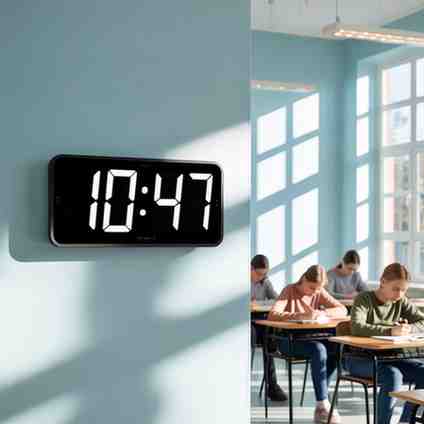
Selecting the right digital clock depends largely on how and where it will be used. For bedrooms, features like adjustable brightness, silent operation, and clear numerals are essential. Meanwhile, for offices or classrooms, larger displays and second counters provide better visibility and precision. Therefore, understanding your environment helps narrow down the most suitable option.
In addition, personal habits matter. Some users need alarms and timers for structure, while others only require a simple time display. Because of this, choosing unnecessary features can complicate usage. A well-chosen digital clock should support routine without demanding constant interaction.
Reliability, Accuracy, and User Trust
Trust is a defining factor in any timekeeping device. A digital clock earns trust by consistently displaying accurate time without frequent adjustments. Whether powered by quartz mechanisms or synchronised online systems, reliability remains the core expectation. As a result, users depend on digital clocks for punctuality and accountability.
Moreover, accuracy builds long-term confidence. In professional settings, even small timing errors can cause disruption. Therefore, digital clocks are designed with tested components and stable systems. This technical reliability aligns strongly with EEAT principles, reinforcing both expertise and dependability.
Digital Clocks and EEAT Value in Everyday Use
From an EEAT perspective, digital clocks demonstrate expertise through proven engineering and long-term usage across industries. Their authority comes from widespread adoption in healthcare, education, transportation, and workplaces. Additionally, trustworthiness is built through consistent performance and simple operation.
Furthermore, digital clocks provide value without requiring user data or complex setup. Unlike smart devices, they function independently of accounts or tracking. Consequently, users experience transparency and control. This simplicity strengthens user trust and enhances everyday usability.
The Role of the Digital Clock in a Technology-Driven World
Even as smart devices dominate daily life, the digital clock maintains a unique position. It offers distraction-free time awareness without notifications or interruptions. Therefore, it supports focus, discipline, and healthy routines in an increasingly noisy digital environment.
At the same time, digital clocks continue to adapt. Online versions, synchronised systems, and improved displays show that evolution is ongoing. However, the core purpose remains unchanged: clear and reliable timekeeping. This balance between stability and adaptation ensures long-term relevance.
Long-Term Benefits and Sustainable Value
One of the strongest advantages of a digital clock is durability. Many devices function reliably for years with minimal maintenance. As a result, they provide excellent long-term value compared to frequently replaced gadgets. Energy-efficient designs further enhance sustainability.
Additionally, digital clocks reduce dependency on multi-purpose devices. By serving a single, focused function, they minimise digital overload. Therefore, they support both environmental responsibility and mental clarity, making them a practical choice for modern living.
Read Also: Michigan Football Recruiting Insights
Conclusion
The digital clock may appear simple, yet its impact is profound. It supports structure, improves time awareness, and enhances daily efficiency across personal and professional settings. Because of its clarity and reliability, it remains one of the most trusted tools in everyday life.
Ultimately, the digital clock succeeds because it respects the user’s time. It delivers information instantly, accurately, and without distraction. As technology continues to evolve, this quiet reliability ensures that the digital clock will remain relevant for generations to come.
FAQs
1. What is a digital clock used for?
A digital clock is used to display time in numeric format, making it easy to read and reliable for daily routines, work schedules, and time management.
2. Are digital clocks more accurate than analogue clocks?
Yes, digital clocks generally provide higher accuracy because they rely on electronic timekeeping rather than mechanical movement.
3. Can a digital clock work without the internet?
Physical digital clocks work independently of the internet, while online digital clocks require an active connection to display accurate time.
4. Is a digital clock better than using a smartphone?
A digital clock offers distraction-free timekeeping without notifications, making it ideal for focus, sleep, and structured routines.
5. Do digital clocks consume a lot of power?
No, most digital clocks are energy-efficient and consume very little power, especially battery-powered models.